
Films screening
From Cox’s Bazar to Dhaka: Young Filmmakers Turn Difficult Realities into Stories of Peace
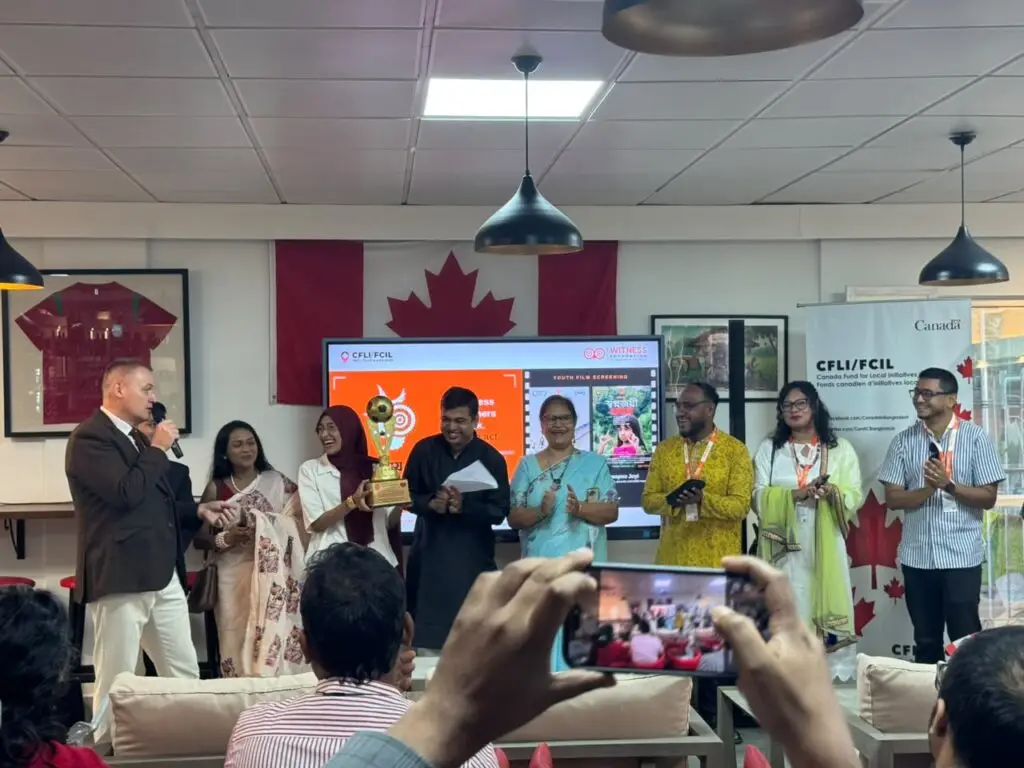
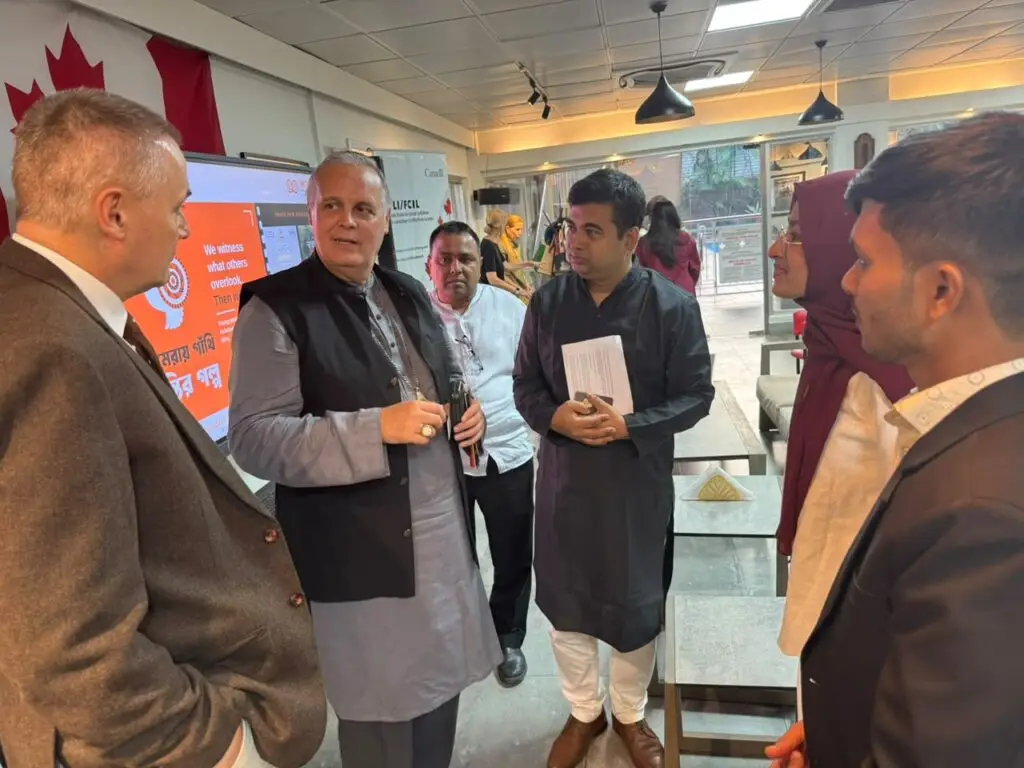
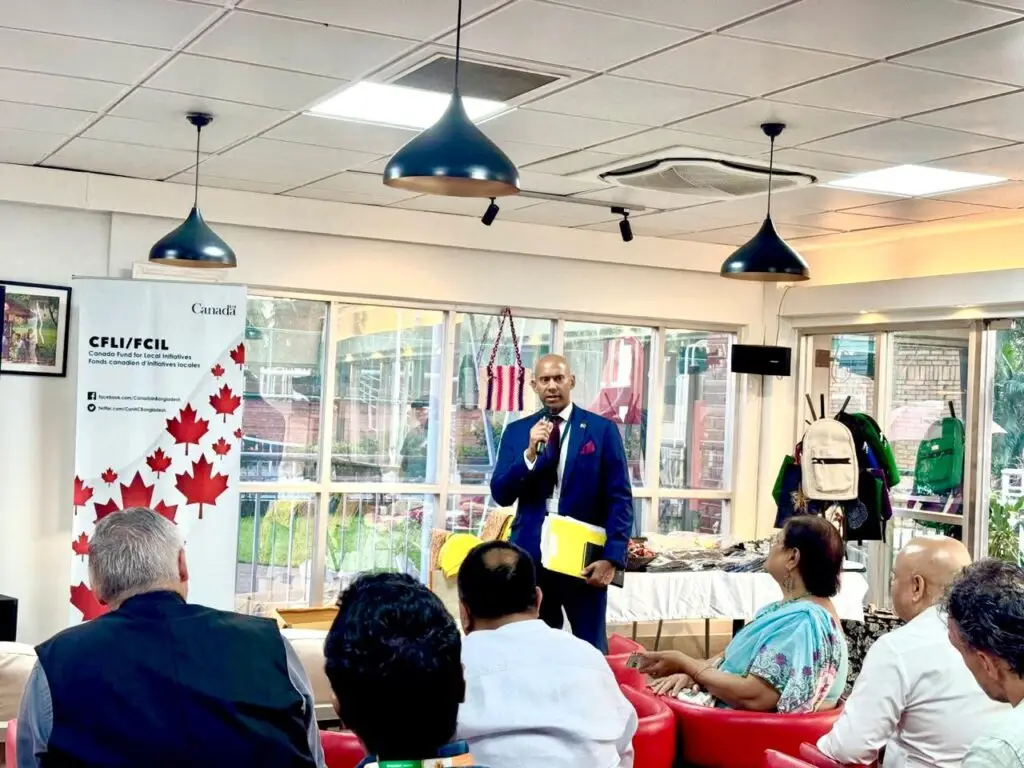
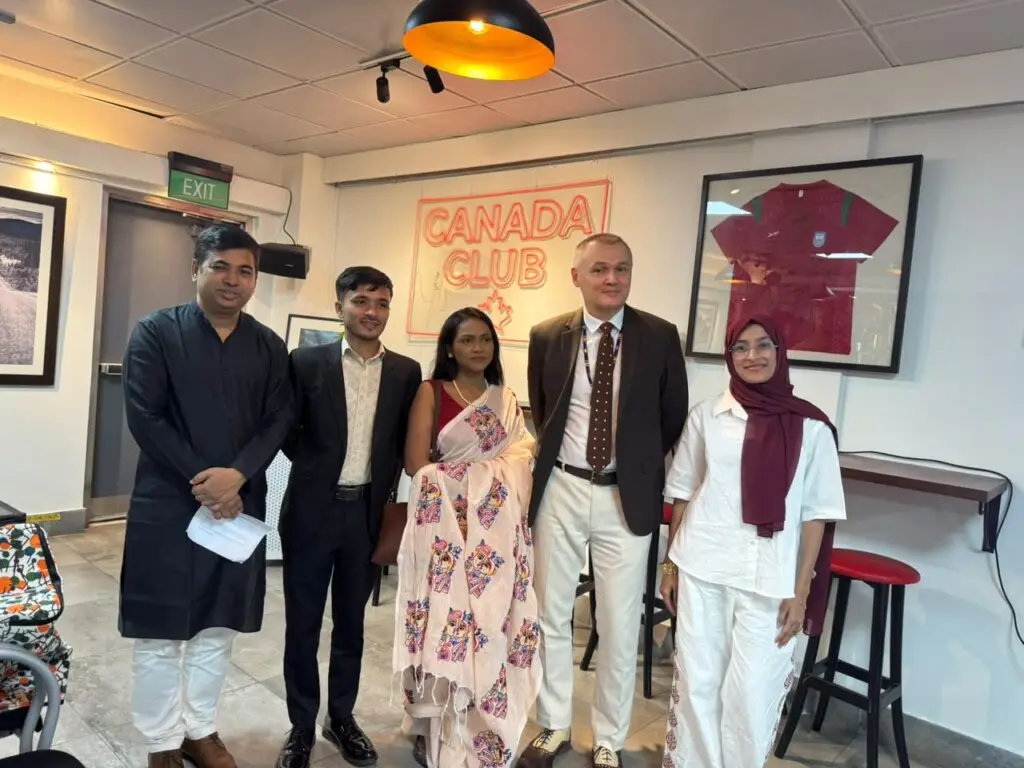
On 29 September 2026, the Canada Club in Baridhara, Dhaka, became a meeting place for stories shaped by experience, uncertainty and hope. The special film screening introduced audiences to works created by young filmmakers from Cox’s Bazar, bringing their perspectives to a national and diplomatic gathering. Their films offered more than artistic expression; they provided an important opportunity to listen to voices often discussed by others but rarely heard directly.
The event demonstrated how filmmaking can help young people examine difficult realities and communicate them with clarity and empathy. Through carefully developed narratives and images, the filmmakers addressed conflict, social injustice and displacement, subjects that affect communities in Cox’s Bazar and beyond. Their work also looked toward peaceful solutions, showing how creative storytelling can encourage dialogue, challenge assumptions and create space for shared understanding.
For the young participants, presenting their films in Dhaka represented a significant step from local production to national visibility. The screening connected their experiences with representatives of institutions, diplomatic missions and wider civil society, allowing audiences to engage with the social issues behind each story. Rather than presenting young people only as recipients of support, the program recognized them as observers, creators and contributors to conversations about peace and social change.
The program was organized by Witness Foundation in collaboration with the High Commission of Canada in Bangladesh, with support from the Canada Fund for Local Initiatives. This partnership underscored the value of investing in youth-led communication and community-based creativity. By bringing Cox’s Bazar filmmakers to the capital, the screening linked local realities with broader public discussion and showed how a camera can become a tool for reflection, advocacy and peaceful engagement.
‘Stories of Peace Through the Camera’ is designed as a creative and civic learning initiative that places young people at the centre of conversations about peace. Rather than treating them only as audiences for awareness campaigns, the program recognizes participants as observers, investigators and storytellers. Through workshops, mentoring and practical filmmaking exercises, they learn to translate personal experiences and community concerns into short visual narratives. The initiative is particularly relevant in places where displacement, poverty, discrimination, insecurity or social division shape everyday life, because it creates a structured space for young people to examine these realities with care and purpose.
The program uses visual storytelling to encourage participants to look closely at the problems affecting their communities and to consider how those problems are experienced by different groups. Developing a film requires listening, research and dialogue, allowing participants to move beyond assumptions and understand perspectives that may otherwise remain overlooked. This process can strengthen empathy while helping young filmmakers communicate complex concerns to audiences beyond their immediate surroundings. Their films provide accessible entry points for discussion among families, peers, community leaders and wider publics, connecting local experiences with broader questions about rights, dignity and social responsibility.
Peacebuilding is therefore central to the initiative’s design. The project gives participants creative tools, including story development, interviewing, visual composition and editing, as well as a public platform through which their ideas can be heard. It supports them in challenging harmful narratives that portray vulnerable people as threats, burdens or statistics, while highlighting resilience, cooperation and shared humanity. By documenting overlooked experiences and imagining constructive responses to difficult social conditions, young filmmakers contribute to more informed dialogue and social cohesion. Their participation also demonstrates that meaningful peace work can begin with the confidence to ask questions, represent others responsibly and propose alternatives to fear, exclusion and silence.
The selection process was designed to identify a diverse group of young people with the motivation to use film as a form of dialogue. In total, 193 applicants competed for 25 places, making the program highly selective while preserving a clear commitment to inclusion. The final group consisted of 11 women and 14 men, bringing together participants with different backgrounds, experiences and perspectives. Their varied personal realities formed an important foundation for a program focused on stories of peace, community and social responsibility.
Once selected, the participants received training across several connected areas. Filmmaking sessions introduced the practical skills needed to develop, produce and present visual stories, including the process of shaping ideas into compelling narratives. Storytelling instruction helped them consider how character, context and emotion can communicate complex experiences clearly. Alongside these creative disciplines, the program included leadership and participatory governance training. This broader curriculum encouraged participants to understand both how stories are made and how communities can take part in decisions that affect their lives.
The combination was significant because technical ability alone does not determine the public value of a film. Strong production and narrative skills enable young filmmakers to create work that audiences can understand and engage with, while leadership training helps them work collaboratively and communicate with confidence. Learning about participatory governance further enabled them to connect individual experiences with wider civic issues, such as representation, access, accountability and community priorities. In this way, personal stories could be presented not as isolated accounts, but as part of larger conversations about social conditions and possible solutions.
The program also encouraged participants to enter public conversations and to represent community experiences responsibly. This required listening carefully, respecting different viewpoints and considering the consequences of placing real lives on screen. By combining creative preparation with civic awareness, the initiative equipped the 25 young people to become storytellers who could contribute thoughtfully to discussions about peace and inclusion in both Cox’s Bazar and Dhaka.
Nadia Hossain and Saju Barua represent a new generation of filmmakers emerging from Cox’s Bazar and its surrounding communities. Through their films, Prohor and Shopnojoye, they draw attention to everyday realities that are often reduced to statistics, headlines, or distant policy discussions. Their work demonstrates how young creators can transform local observations into narratives with national and international relevance.
Both filmmakers bring an important perspective shaped by proximity to social pressures, displacement, inequality, and the search for security and dignity. Rather than treating these issues as abstract subjects, they present them through characters, relationships, and experiences that audiences can understand emotionally. This approach gives their storytelling an authenticity that cannot easily be reproduced by observers unfamiliar with the region.
For communities in Cox’s Bazar and other vulnerable areas, representation is closely connected to voice and agency. Their realities should not be described only by outside observers, whose accounts may overlook local histories, cultural details, and the ways residents interpret their own circumstances. When filmmakers from these communities tell their own stories, they can challenge simplified portrayals and show both hardship and resilience without separating either from the other.
Hossain and Barua therefore serve several roles at once. They are storytellers who create compelling cinematic work, community representatives who bring local concerns into wider conversations, and emerging peace ambassadors who use creative expression to encourage understanding. Their films invite viewers to consider how conflict, uncertainty, and hope are experienced by ordinary people, while also emphasizing shared human aspirations.
Their participation signals the value of investing in young artistic voices from regions affected by vulnerability and social change. With appropriate platforms, mentorship, and access to audiences, filmmakers such as Hossain and Barua can connect local experience with broader discussions about coexistence. Their work shows that stories rooted in place can cross borders, contribute to constructive dialogue, and help build a more nuanced understanding of peace.
‘Prohor’ examines how misinformation and rumours can transform uncertainty into fear, hostility and violence. Rather than presenting conflict as the result of a single dramatic event, the film draws attention to the stories that circulate before violence begins. An unverified claim, an edited image or an inflammatory message can create suspicion between neighbours and communities, especially when people are already living with insecurity. In such circumstances, information is not merely shared; it shapes how individuals interpret the intentions of others and decide whether they are under threat.
A central concern of the film is the speed with which rumours travel. Claims repeated through conversations, social media or informal networks may reach many people before anyone has checked their accuracy. Each retelling can add detail, emotion or accusation, making an uncertain report appear to be established fact. By the time reliable information becomes available, relationships may already be damaged. Fear can prompt people to withdraw, confront others or support collective punishment, while anger can provoke reactions that would not have occurred if the facts had been known from the beginning.
Through this subject, ‘Prohor’ suggests that peacebuilding requires more than responding to violence after it has occurred. It also depends on interrupting harmful narratives at an early stage. Critical thinking enables people to question the source, evidence and purpose of a claim instead of accepting it immediately. Responsible communication means avoiding the forwarding of sensational or unconfirmed material, while fact-checking can help distinguish evidence from speculation. Dialogue is equally important because direct, respectful conversation can correct misunderstandings and restore trust between groups.
The responsibility for preventing escalation is shared. Individuals can pause before sharing information; community leaders can address uncertainty openly and discourage retaliatory language; and media users can seek reliable sources, provide context and correct errors. By focusing on these everyday choices, ‘Prohor’ frames peace as a practical community effort. Its message is that false information becomes dangerous when people treat it as a reason to act, but its destructive power can be reduced when communities choose verification, empathy and conversation instead.
Shopnojoye presents the experience of a coastal family living under several pressures at once. Climate-induced displacement is not shown as a distant environmental concern, but as a disruption that enters the home, the workplace and the family’s future. Rising water, erosion, storms or changing weather patterns can destroy houses, damage farmland and fishing grounds, and remove the stable surroundings on which families depend. When a household is forced to move, it may lose not only property but also access to schools, healthcare, employment and community support.
These losses can deepen economic hardship. Displaced families often arrive with few resources, uncertain income and limited control over the conditions in which they must rebuild their lives. In Shopnojoye, that insecurity is connected to the threat of child marriage. When parents struggle to provide food, housing or education, marrying a daughter early may appear to offer financial relief, social protection or a way to reduce family responsibilities. Such decisions are shaped by constrained choices rather than simple individual preference, yet they place girls at greater risk of leaving school, losing independence and facing lifelong inequality.
The film’s human dimension lies in this tension between responsibility and uncertainty. Family members must protect one another while making decisions in circumstances they did not create and cannot easily control. Their hopes for dignity, education and a secure future confront the immediate demands of survival. By following these limited choices, Shopnojoye encourages audiences to understand climate change through the lives of vulnerable people, particularly girls whose opportunities may narrow as crises accumulate. The story therefore links environmental change with protection, gender equality, education and human rights. Responding to displacement requires more than rebuilding homes; it also demands social safety nets, access to schooling, secure livelihoods and safeguards against child marriage. In this way, the film shows that climate justice must include the right to live safely, learn freely and imagine a future beyond crisis.
The Dhaka screening brought together an unusually broad audience, connecting diplomatic representatives, civil society leaders, development professionals and advocates for community-based change. Among those attending were Canadian High Commissioner Ajit Singh, Witness Foundation Executive Director Pervez Siddiqui, Witness Foundation Chairperson Sheepa Hafiza and Political Counsellor Marcus Davis. Representatives from the United Nations, as well as other national and international organizations, also joined the event. Their presence placed the young filmmakers’ work within a wider conversation about peacebuilding, social cohesion and the responsibilities of institutions working in communities affected by crisis.
The diversity of attendees gave the screening significance beyond that of a cultural gathering. Diplomats and representatives of development organizations had an opportunity to encounter stories shaped directly by young people living close to the realities they documented. Rather than presenting those communities only through statistics or institutional reports, the films conveyed personal experiences, local concerns and aspirations in the filmmakers’ own voices. This helped demonstrate how creative work can make complex social issues more accessible while preserving the dignity and agency of the people represented.
The event also created space for institutions to listen. Community-based perspectives often remain distant from formal policy discussions, even when they concern the same issues that governments, international agencies and civil society groups seek to address. Through the screening and the conversations surrounding it, attendees could recognize the value of youth-led approaches to peace, resilience and social change. The filmmakers showed that young people are not merely beneficiaries of development initiatives; they can also be observers, storytellers and partners in shaping responses to conflict and displacement.
By bringing these groups into one setting, the Dhaka event strengthened connections between lived experience and institutional action. It encouraged a more collaborative understanding of filmmaking as a tool for dialogue, accountability and community engagement. The gathering therefore affirmed that stories emerging from Cox’s Bazar can inform wider discussions, influence public attention and help build relationships among young creators, local organizations and international actors committed to peaceful and inclusive change.
The response from High Commissioner Ajit Singh gave the young filmmakers a significant moment of recognition after the screening. He praised both films for their emotional depth and thoughtful treatment of difficult realities, acknowledging the care with which the creators had shaped their stories. His particular response to Shopnojoye was especially meaningful. Singh said that the film had touched him and would remain with him for a long time, a reflection that highlighted the work’s ability to reach audiences beyond the circumstances in which it was made.
Such a reaction demonstrates the emotional and human power of the two films. Their stories emerge from local experiences in Bangladesh, including hardship, displacement, uncertainty, and the determination to build a more peaceful future. Yet the concerns they explore are not limited to one community or country. By presenting personal experiences with honesty and sensitivity, the filmmakers connect those realities with wider global questions about human dignity, compassion, conflict, and the responsibilities of society. The High Commissioner’s response suggests that authentic storytelling can cross cultural and geographical boundaries without losing the specificity of its origin.
Recognition from an international audience can also help validate the perspectives of young creators who may otherwise struggle to have their work heard. For these filmmakers, Singh’s words offered more than formal appreciation; they affirmed that their observations and creative voices matter in broader conversations about peace and social understanding. Encouragement of this kind can strengthen their confidence to continue exploring challenging subjects through film. It can also inspire them to use art not only to document difficult conditions, but to promote awareness, empathy, and compassionate action. When a story remains with viewers long after a screening ends, it has achieved an influence that extends beyond entertainment and contributes to meaningful human connection.
Pervez Siddiqui’s statement that placing a camera in a young person’s hands captures more than images; it also records voices, realities and dreams for change. This perspective recognizes filmmaking as a form of listening and participation. When young people document their communities, they do more than tell stories for an audience; they create space for experiences that are often ignored or misunderstood. Their work can reveal the human consequences of conflict while making room for empathy, dialogue and shared responsibility.
As peace ambassadors, youth filmmakers can challenge misinformation by presenting firsthand accounts and carefully observed local realities. Their films may promote tolerance by showing how people with different backgrounds live, work and hope within the same communities. They can amplify the voices of refugees, marginalized families, women and other vulnerable groups whose concerns are frequently absent from public debate. By encouraging audiences to question stereotypes rather than accept unverified claims, these storytellers support informed and constructive public discussion. A camera therefore becomes not simply a production tool but a means of building trust and strengthening social cohesion.
Witness Foundation, formerly known as Films for Peace Foundation, is a Bangladesh-based peacebuilding organization working on youth empowerment, social cohesion and positive social change. Its approach connects creative learning with meaningful participation, enabling young people to explore realities and respond to them. Through training, collaboration and platforms for expression, participants develop the confidence to ask questions, engage decision-makers and communicate. The two films featured demonstrate why opportunities matter. They show that creative education can transform community challenges into calls for peace, accountability and hope, while meaningful participation helps ensure those calls are grounded in experience. Together, these examples suggest that when young people are trusted with tools, guidance and an audience, they can shape narratives that resist division and point toward a peaceful future.